


Seventy years ago, a simple idea took shape: that young people should have the chance to develop beyond the classroom, to try new things, to push themselves a little and to discover what they were capable of. In 2026, the Duke of Edinburgh’s Award reaches its 70th anniversary, and the idea has proved remarkably durable.
Since 1956, the DofE Award has helped generations of young people build confidence, learn practical skills, form friendships and find out what they can achieve. It has been a first expedition for some, a first time volunteering for others and, for many, the first experience of finishing something they were not sure they could. Few youth programmes can claim that kind of staying power.
The anniversary has been marked throughout the year, with celebrations recognising the participants, volunteers, leaders, organisations and supporters who have shaped the Award over seven decades. This month, the festivities reach another significant milestone with a special anniversary evening, bringing guests and supporters together for a night of timeless elegance, with drinks, a seated dinner, fine cuisine, wine and live music. It is a chance to honour the legacy of the Award, thank those who have helped make it possible and look ahead to the next generation of young people who will benefit.
At the Anderton Centre in Chorley, this is an anniversary we are proud to celebrate. As a DofE Licensed Organisation and Approved Activity Provider, we have the privilege of supporting young people on their journeys, and we wanted to mark seventy years of the Duke of Edinburgh’s Award by looking at what it has meant, why it still matters and where it might go next.
Seventy years on, the DofE is still creating opportunities, opening doors and inspiring young people to achieve more than they thought possible.
A look back: how the DofE has changed lives for 70 years
The Award began in 1956, founded by Prince Philip with the aim of encouraging the balanced development of young people. The original programme was built around a handful of challenges, including an expedition, and it was piloted for boys before being extended to girls shortly afterwards. The vision behind it was straightforward but ambitious: to offer young people experiences that school alone could not provide, and to recognise effort and perseverance rather than natural talent.
Over the decades, the Award has grown enormously. The charity’s chief executive has noted that around 7,000 young people started a DofE journey in the early years, compared with more than 345,000 starting in 2026, and the total number of young people in the UK who have begun an Award since 1956 is estimated to be in the millions. That scale reflects something important. The Award has not remained relevant by standing still. It has adapted to changing generations, new technology and a very different world from the one young people grew up in during the 1950s.
Today, the Award is built around four sections: volunteering, physical, skills and expedition, with a residential added at Gold level. Each section asks participants to commit to something over time, whether that is helping their community, taking up a sport, learning a new skill or heading into the outdoors for an expedition. Together they encourage a rounded set of experiences, and no two participants’ journeys are quite the same.
Equipment has changed. Paper maps now sit alongside digital navigation tools, and record books have given way to online platforms. But the heart of the Award has remained constant. Setting a goal, working towards it, facing difficulties and finishing what you started is as valuable today as it was in 1956. The DofE has stood the test of time because its values are just as relevant now as they were then.
More than an award: the skills that last a lifetime
It is easy to think of the DofE in terms of certificates and badges. Completing a Bronze, Silver or Gold Award is a genuine achievement, and it deserves to be celebrated. But the real value lies in everything participants learn, experience and overcome along the way.
Taking part helps young people build confidence and independence, often in ways they did not expect. Learning to carry your own kit, navigate with a map and compass or cook a meal at the end of a long day on the trail teaches self-reliance very quickly. Working with a team towards a shared goal develops communication, cooperation and leadership, as participants learn to listen to one another, share the load and encourage anyone who is struggling.
Resilience grows through the challenges that every Award inevitably includes. A wet day, a wrong turn or a blister at the wrong moment can feel like a setback at the time, but working through them builds problem-solving skills and a quiet belief that difficulties can be overcome. Taking responsibility, showing commitment over weeks and months and discovering new interests and abilities all add to the picture.
These experiences can also support young people’s future education, employment and personal development. Many schools, colleges, universities and employers recognise the commitment and character that completing an Award demonstrates. But we would argue that the greatest benefit is personal: young people discover that they can do more than they thought.
Every participant’s journey is different, and that is part of what makes the Award so valuable. One young person may find their passion in volunteering, another in a new skill and another on the hillside in the rain. The framework is the same, but the story each person tells afterwards is entirely their own.
The Anderton Centre and the DofE: supporting young people every step of the way
The Duke of Edinburgh’s Award is an important part of the work we do at the Anderton Centre in outdoor learning and youth development. As a DofE Licensed Organisation and Approved Activity Provider, we support young people through several elements of their Award, working with schools, youth groups and individual participants.
DofE expeditions
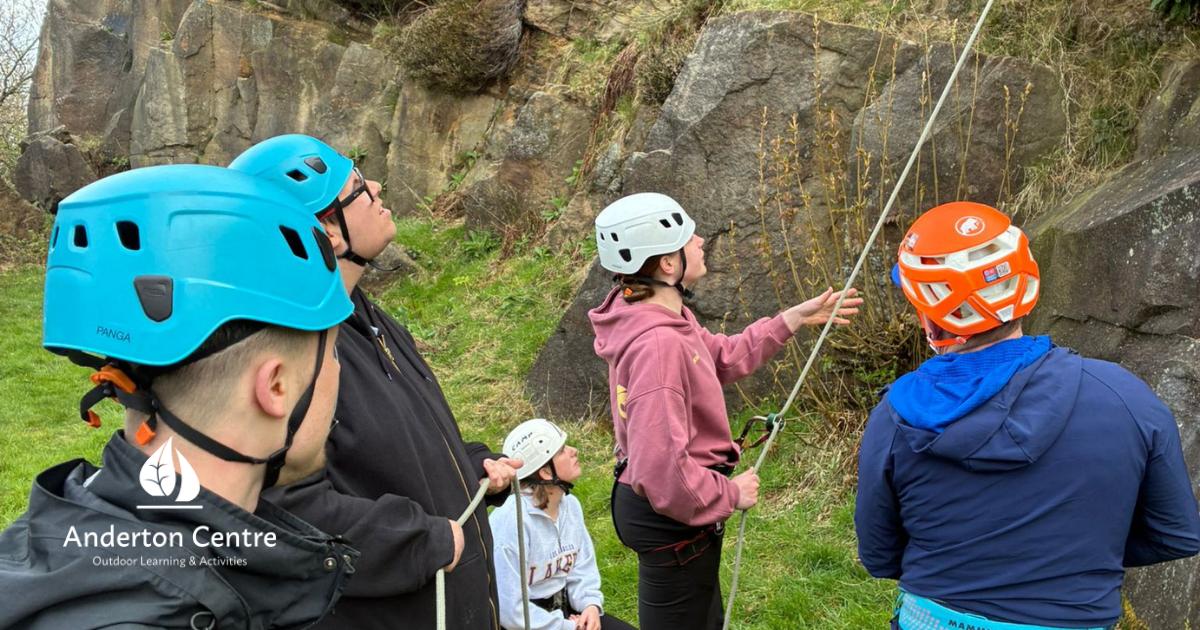
Expeditions are often the part of the Award that young people remember most vividly, and we support Bronze, Silver and Gold Award expeditions from start to finish. That begins with training and preparation, where participants develop the skills they will need, including navigation and map reading, campcraft and outdoor living. They learn how to plan a route, pack sensibly, pitch a tent and look after themselves and one another in the outdoors.
Just as important are the less visible skills. Expeditions ask groups to work as a team, communicate clearly and make decisions together, often in unfamiliar surroundings and with nobody else to do it for them. For many young people, this is where independence and confidence really begin to grow.
We then support participants through their assessed expeditions, with experienced staff on hand to help them make the most of the challenge. Our expeditions take place in a variety of locations, including Lancashire, the Peak District and the Lake District, and are led by qualified Mountain Leaders and DofE Assessors who know the terrain and understand how to support young people well.
Open Award expeditions
Not every young person has access to the DofE through their school or an existing group, and we believe that should not stand in the way of taking part. Our Open Award provision offers independent participants a way to access expedition opportunities and work towards their Award. For young people who may otherwise miss out, it can be a genuine doorway to the programme, and a chance to meet others who are working towards the same goal.
Hybrid trekking and canoeing expeditions
For groups looking for something a little different, we offer hybrid expeditions that combine trekking and canoeing. Moving between land and water offers a fresh kind of challenge. Participants must adapt to different environments, work closely as a team and learn new skills, and many find that the variety adds to the sense of adventure. Adaptability, teamwork and confidence are tested in new ways, and the experience tends to stay with young people long after the kit has been unpacked.
Gold residentials
Gold Award participants are required to complete a residential, and we are pleased to support them through our own residential opportunities. A full-board stay gives young people the chance to spend time away from familiar surroundings, meet new people, take part in shared activities and practise independence in a supportive environment. For many, it is a highlight of their Gold journey.
The Anderton Centre is not simply somewhere young people visit to complete a requirement. We see ourselves as part of a wider journey, helping participants develop the skills, confidence and experiences that make their DofE Award meaningful.
Beyond the expedition: why outdoor learning matters
The DofE ethos sits comfortably alongside our wider mission at the Anderton Centre. We believe that outdoor environments offer opportunities for learning that cannot always be replicated in a classroom.
Outdoors, young people learn through experience rather than instruction alone. They face challenges and find their own solutions, work together towards a shared goal and build confidence through achievement. They develop an appreciation for the natural environment, and they discover, often to their surprise, that progress frequently comes from stepping outside their comfort zone.
Our location helps. The Centre sits alongside Lower Rivington Reservoir, with the surrounding Lancashire countryside offering a wonderful setting for learning, adventure and time in nature. It is a place where a group can practise navigation in the morning, take to the water in the afternoon and spend the evening swapping stories about the day.
These experiences are valuable far beyond the length of an expedition. The skills young people practise outdoors, such as planning, communicating, persevering and supporting one another, can influence how they approach challenges in education, in work and in everyday life. A young person who has navigated a wet, windy hillside with their team may find the next exam, interview or difficult conversation a little less daunting.
Looking ahead: the next 70 years of the DofE
Seventy years is a remarkable achievement, but the story is far from finished. The most important question for any anniversary is what comes next.
For the DofE, that means continuing to make the Award accessible to more young people, ensuring that opportunities are available regardless of background or circumstances. It means encouraging more young people to experience the outdoors, to develop confidence, resilience and independence and to discover what they can do. And it means supporting the schools, youth groups, leaders, volunteers and organisations that make participation possible.
Organisations like the Anderton Centre have a role to play in that future. Access to a qualified expedition provider, suitable training, safe and well-managed outdoor spaces and a supportive team can make the difference between an Award that feels out of reach and one that feels achievable. As a not-for-profit, charitable organisation, we are committed to helping as many young people as we can to take part, and we are grateful to everyone who supports us in doing so.
Raising a glass to 70 years
As the anniversary celebrations reach their November milestone, there will be plenty of reasons to raise a glass. The special evening is a chance to look back on the Award’s remarkable history, recognise the people who have contributed to its success and inspire those who will carry it forward.
But while the evening offers a moment to reflect and celebrate, the real legacy of the DofE does not sit in a ballroom or an archive. It lives on in the young people taking part today, and in those who will begin their own journeys in the years ahead. It is in the Bronze participant nervously packing a rucksack for the first time, the Silver group learning to read the land together and the Gold participant stepping into a residential with a new group of friends.
Seventy years of the DofE is seventy years of young people discovering what they are capable of. From their first expedition to the challenges of a Gold Award, every journey represents an opportunity to learn, grow and achieve. At the Anderton Centre, we are proud to play a part in that journey, and we look forward to supporting the next generation of DofE participants for many years to come.
If you are a school, youth group or young person interested in DofE expeditions, Open Award opportunities or Gold residentials, we would love to hear from you. You can call us on 01257 484220 or email info@andertoncentre.co.uk. You can also follow our social media profiles to see what our groups have been up to, and to share the story of the Award with others who might want to get involved.
As a not-for-profit, charitable organisation, we rely on the support of the people who value what we do. Every enquiry, booking and share helps us to keep offering outdoor learning, adventure and the Duke of Edinburgh’s Award to young people across Lancashire and beyond. Thank you for being part of it.
